You Can See Everything was mindbending
I went into Nathan Fielder and Lance Oppenheim’s documentary trying to put aside what I already knew about Elizabeth Holmes. At several points during You Can See Everything, I caught myself thinking, wait, is she actually innocent? Is she just naive? What is happening? I could feel her reality distortion field working on me. Even knowing that, I kept buying her explanations.
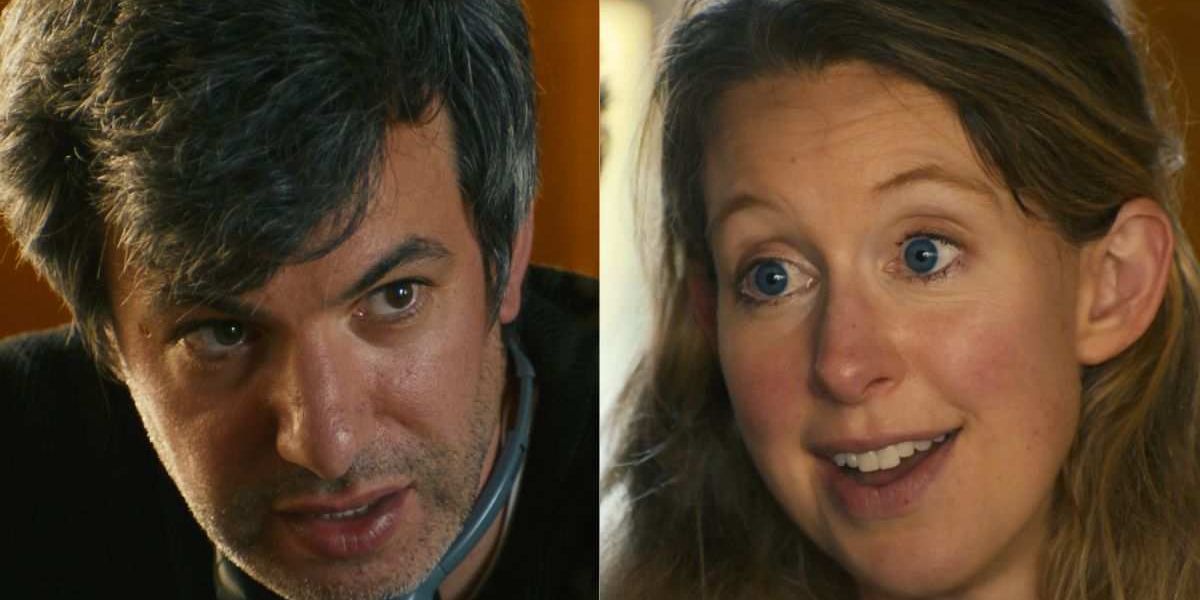
A friend pointed out that the intimacy was what made the film so good. I think that explains some of it. You’re watching her at home, talking to her family and the people who love her. I mostly knew her through headlines, so seeing her like this made me curious about how she understood her own actions. Did she believe what she was saying? Did she understand how other people would hear it?
The conversation about her claim that “The device can run any test” was absolutely wild. She explains “can” as something the device could potentially do. I would hear that sentence and assume the device already does it. Those are very different claims, especially when people are relying on a blood-testing device. But listening to her explain her reasoning for using that framing, I found myself completely excusing her phrasing.
And then there’s the score. It’s crazy how much it changes the way a scene feels.
Nathan plays Abbott and Costello’s “Who’s on First?”, an old comedy routine about a baseball player whose name is literally “Who” (lol). Costello asks who’s playing first base. Abbott answers with the player’s name, but Costello thinks Abbott is asking him the question back. They keep going in circles.
Nathan uses it to illustrate how his conversation with Elizabeth feels to him. I understood the comparison, but the music made me suspicious of her. I really want to watch that scene again without it. Just their voices and whatever sounds were actually in the room. Would I read her reaction the same way?
I kept going back and forth like that. Elizabeth would explain something and I’d believe her. Then I’d question why I believed her. Then I’d wonder how much the music and editing had influenced me, and start questioning Nathan too. I don’t know how much of that the filmmakers intended, but it made the movie fascinating to watch.
My friend was right about the intimacy. I wanted to understand these people more by the end. Three hours in, and I’m still not sure I do.